
Evaporative Condensers for Refrigeration Systems
The condenser coil and the cooling tower in one compact unit.
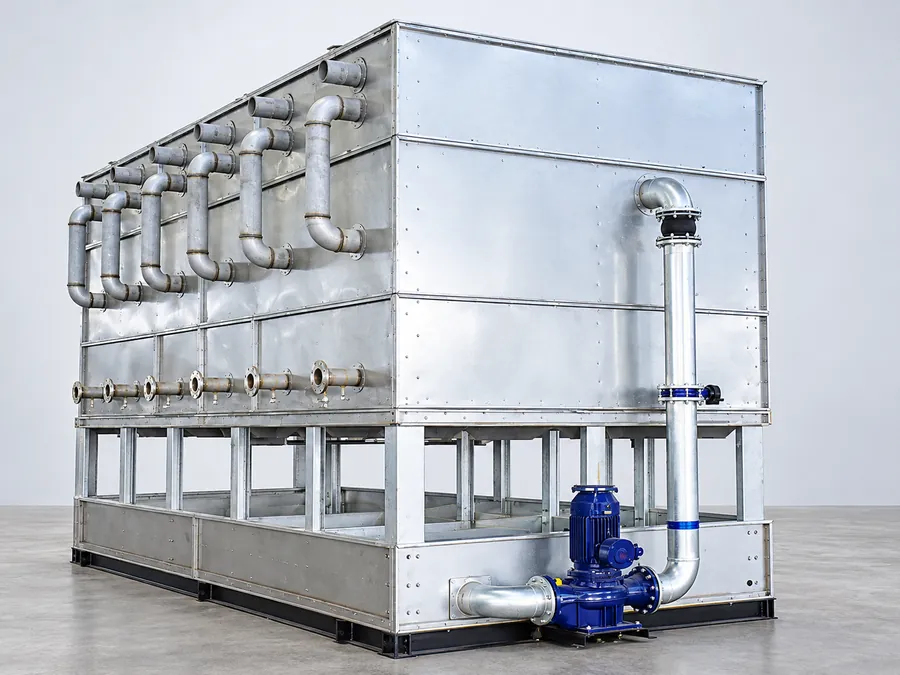 Illustrative
Evaporative Condensers
Refrigerant condenses inside the coil while spray water evaporates on the outside, so the condensing temperature stays lower than with air-cooled condensers. No separate cooling tower is required, saving space and installation cost.
Evaporative condenser principle
A simplified view of a counterflow evaporative condenser.
01
Hot gas enters
Compressed refrigerant gas flows into the condenser coil inside the unit.
02
Spray and evaporation
Spray water falls over the coil. Part of it evaporates and removes the heat of condensation.
03
Air carries heat out
The fan draws air upward through the unit. Warm moist air leaves at the top.
04
Liquid leaves
The refrigerant condenses to liquid and flows out. Spray water returns to the basin and is recirculated.
Why it matters
Energy saving
Lower condensing temperature than air-cooled condensers.
Water saving
Uses latent heat of evaporation efficiently.
Compact
Small footprint and one integrated unit.
No venting loss
Avoids releasing non-condensable gas to relieve pressure.
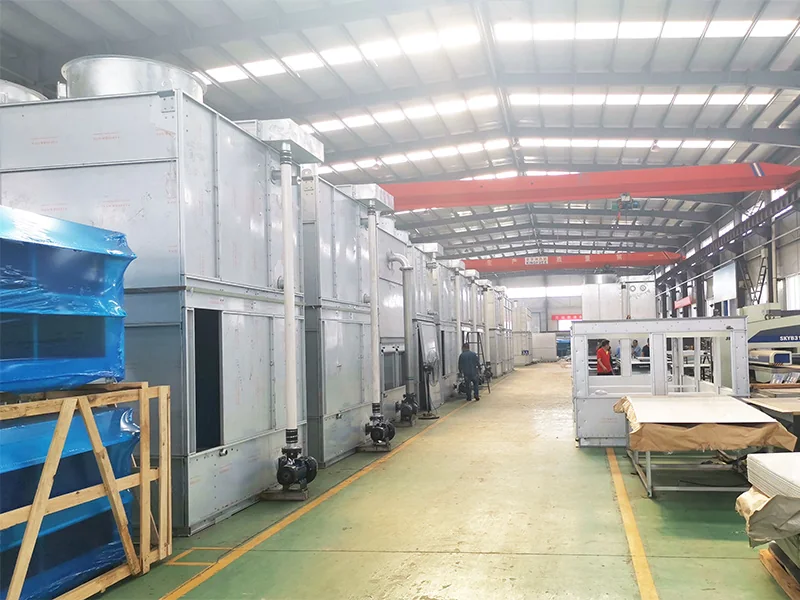
Photos from our production and projects
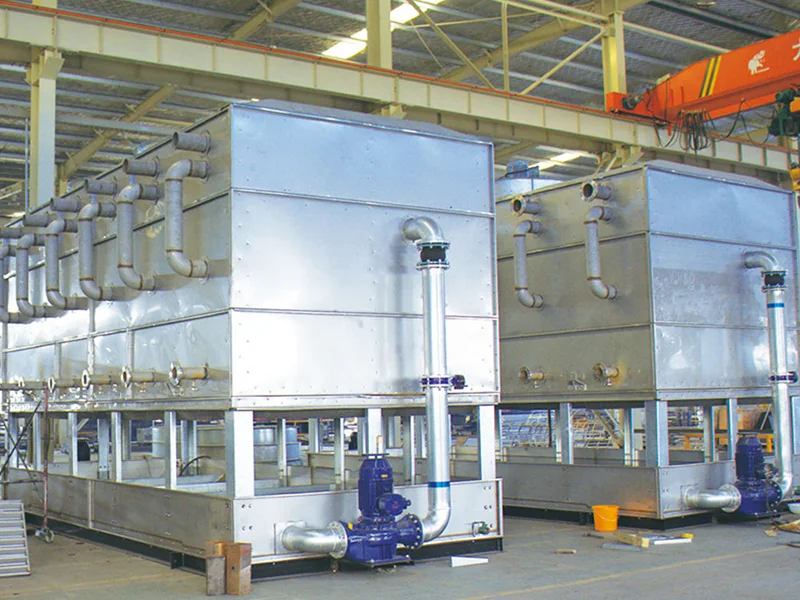
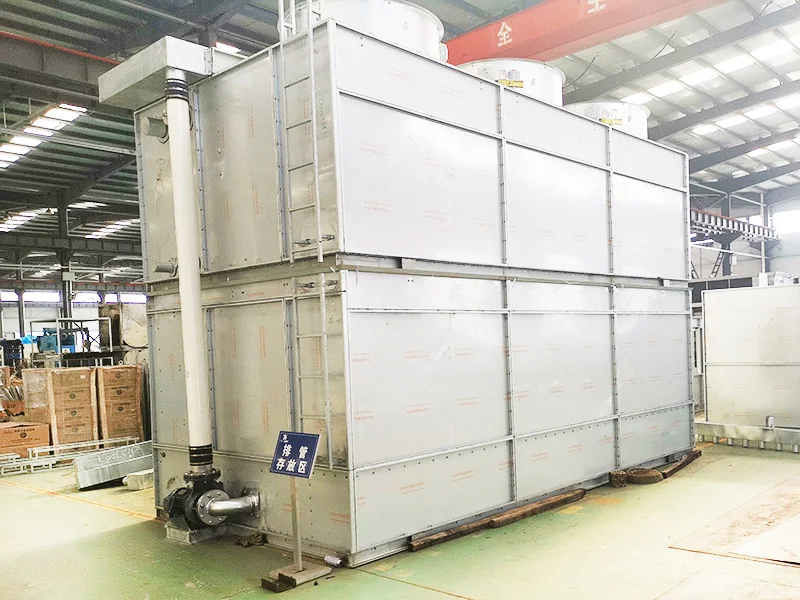
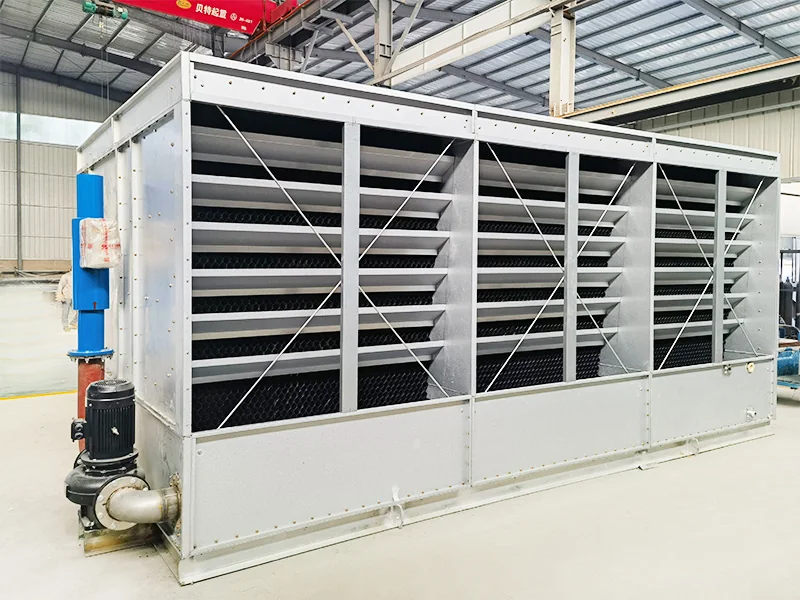
Series
Counterflow series
Compact structure and small footprint, with optional pre-cooling fins for water-scarce areas.
Composite flow series
Designed for high-temperature fluids and anti-scaling operation.
Engineered to your requirements
Selection data
Capacity data for counterflow and composite flow evaporative condensers is available on request. Send your refrigerant, heat rejection load and ambient design conditions.
Need a recommended model?
Send your design conditions and an engineer will reply with a selection and quotation.