Open vs. Closed Cooling Towers: How to Choose
Both open and closed cooling towers reject heat to the atmosphere. The difference is what happens to the fluid you are cooling.
How an open cooling tower works
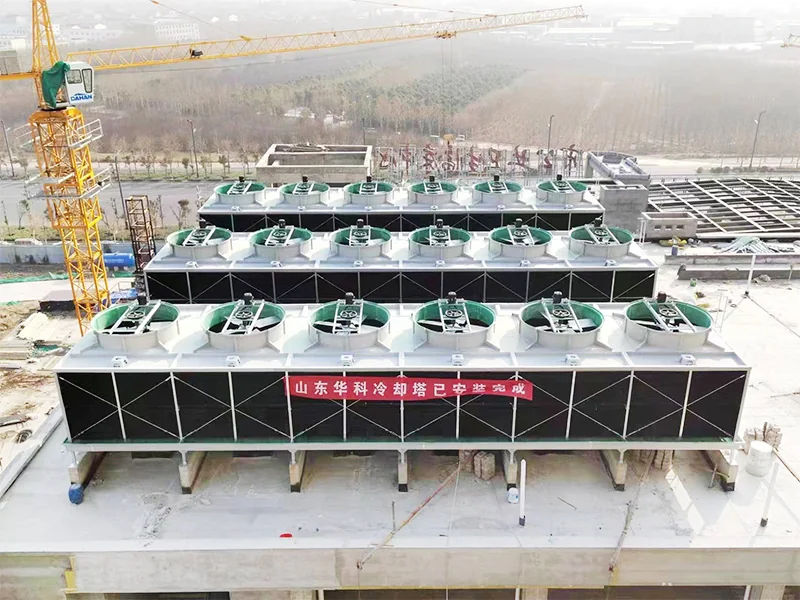
In an open tower the circulating water is sprayed over fill and cooled directly by air. A small part evaporates, which carries the heat away. Because the water is exposed to air, it picks up dust and impurities and normally needs water treatment.
How a closed cooling tower works
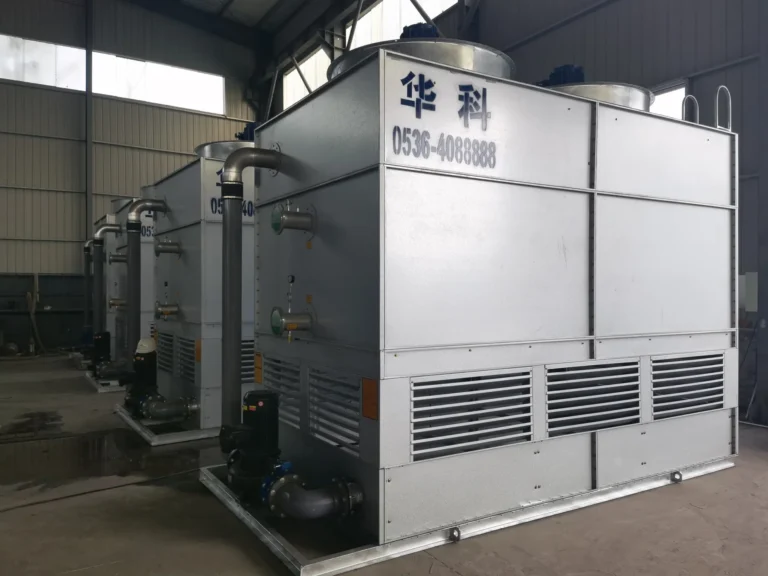
In a closed tower the process fluid flows through a sealed coil inside the tower. Spray water and air cool the outside of the coil, so the process fluid never touches the atmosphere. The spray water is a separate loop.
Quick comparison
- First cost: open towers are lower; closed towers cost more for the coil and a second pump.
- Process fluid quality: closed towers keep it clean and sealed; open towers expose it to air.
- Water treatment: closed towers only need to treat the smaller spray loop.
- Water saving: a closed tower can stop its spray when the air is cool, and wet-dry models reduce water use further.
- Freeze protection: a closed loop can run with antifreeze fluid inside the coil.
Which one should I choose?
Choose an open tower when the lowest first cost matters and the circulating water can be treated. Choose a closed tower when the process fluid must stay clean, when pumps and heat exchangers need protection, or when water is scarce.
Need help choosing? Send your design conditions through the Get a Quote form and an engineer will recommend a model.